Method development for simultaneous determination of 8 quinolones using SQ910 LC-MS
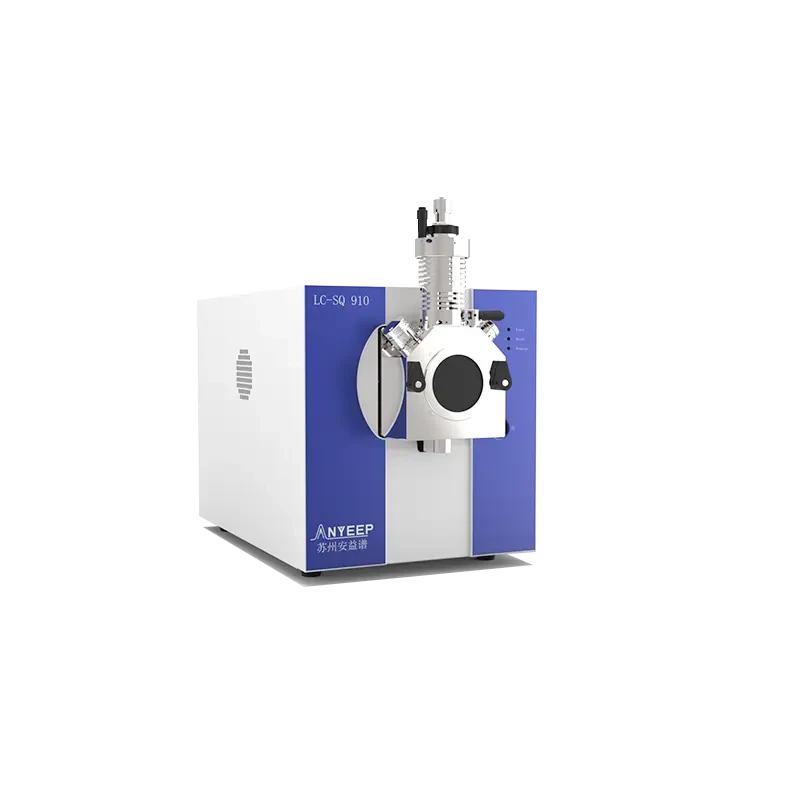
Consolidate multiple residues of the same quinolone class into a single chromatography–mass spectrometry workflow for simultaneous qualitative and quantitative analysis in one injection. Using SQ910 LC-MS as an example, this article outlines key design considerations across four stages: compound list and chromatographic conditions, sample preparation, mass spectrometry data acquisition, and validation/confirmation. It covers retention of amphoteric compounds, the impact of pH on recovery rates, and requirements for dual ion-pair confirmation.
Quinolones are widely used in livestock, poultry, and aquaculture. Residue monitoring programs typically group drugs within the same class into a single report. Testing each compound individually for residue significantly increases sample preparation and injection counts, extending batch turnaround time. The value of multi-residue methods lies in analyzing multiple compounds in a single chromatography-mass spectrometry run to achieve both qualitative and quantitative results simultaneously. Below, using the typical application of the Suzhou Anyipu SQ910 LC-MS as an example, we break down this approach into four key stages: compound list and chromatographic conditions, sample preparation, mass spectrometry acquisition, and validation/confirmation.
1. Lock in the compound list first, then derive the chromatographic conditions.
This article discusses the following 8: norfloxacin, ciprofloxacin, enrofloxacin, ofloxacin, lomefloxacin, pefloxacin, sarafloxacin, and difloxacin. These compounds exhibit similar retention behavior on a reversed-phase C18 column. Their core structures all contain both a carboxyl group and a piperazine ring, making them typical amphoteric compounds. Adding formic acid to the mobile phase improves peak shape and enhances positive ion response.
The gradient design separates components based on polarity over time. Starting with a high aqueous phase ratio ensures sufficient retention of highly polar compounds like norfloxacin, while increasing the organic phase ratio later elutes more hydrophobic compounds such as enrofloxacin and difloxacin. A critical pitfall to avoid: levofloxacin is the left-handed enantiomer of ofloxacin; both are enantiomers and cannot be separated on a standard C18 column. If your testing requires distinguishing between them, you must switch to a chiral column and develop a dedicated method—gradient adjustments alone will not resolve this.
2. Lower Limit of Preprocessing Decision Method
Animal-derived matrices (muscle, liver, aquatic products) have high protein and lipid content; direct injection contaminates the ion source and elevates the baseline. Two common approaches are: acetonitrile acidification with salting-out for water removal, or extraction using formic acid in water followed by polymer-based solid-phase extraction cleanup. The former offers higher throughput, while the latter provides more thorough cleanup. Selection depends on the matrix type and regulatory limits.
Extraction pH is a critical variable for recovery. Quinolones exist as cations in acidic conditions and undergo carboxyl dissociation in alkaline conditions, resulting in significantly different partition coefficients for both forms. During method development, recoveries should be empirically measured using spiked samples across various pH levels rather than relying on literature values. Isotope-labeled internal standards must be added to the extraction solution at the outset so they co-experience the entire sample preparation process; this ensures that only true losses are corrected.
3. Mass Spectrometry Acquisition: Two ion pairs are the definitive threshold for confirmation.
In electrospray ionization positive mode, all 8 compounds produce stable [M+H]+ precursor ions. Multiple reaction monitoring (MRM) must acquire at least two ion pairs: one for quantification and one for qualification. Qualification cannot rely solely on retention time; ion intensity ratios must also fall within the allowable tolerance specified by applicable regulations. Reporting results based on a single ion pair is insufficient and may not withstand scrutiny in disputed cases.
The response intensities of 8 compounds can vary by orders of magnitude. Sulfadiazine and difloxazine typically show weaker responses than enrofloxacin; therefore, acquisition dwell times should be set per compound group to prevent peak distortion in low-signal components due to insufficient scan points. The SQ910 LC-MS acquisition method supports retention time-based segmentation, allowing dwell times to be concentrated within each elution window.
4. Validation and Confirmation: Make the Numbers Count
Method validation must cover at least five parameters: linearity, limit of detection (LOD), recovery, precision, and matrix effect. The linear range should encompass the regulatory limit. Use matrix-matched calibration curves or isotopically labeled internal standards to correct for matrix effects; external standard methods tend to overestimate recovery in high-fat matrices. Recovery and precision must be evaluated by matrix category; performance data from muscle cannot substitute for that from aquatic products using the same method.
The limit of detection (LOD) must not be arbitrarily assigned. Use spiked blank matrix and confirm stepwise via signal-to-noise ratio or lowest quantifiable concentration, retaining raw spectra. Quality control samples must accompany each batch. Evidence of long-term method stability comes from QC data across consecutive batches, not from a single impressive validation report.