Detection limit better than 10⁻¹⁴ g; how to read the specs for a single quadrupole GC-MS
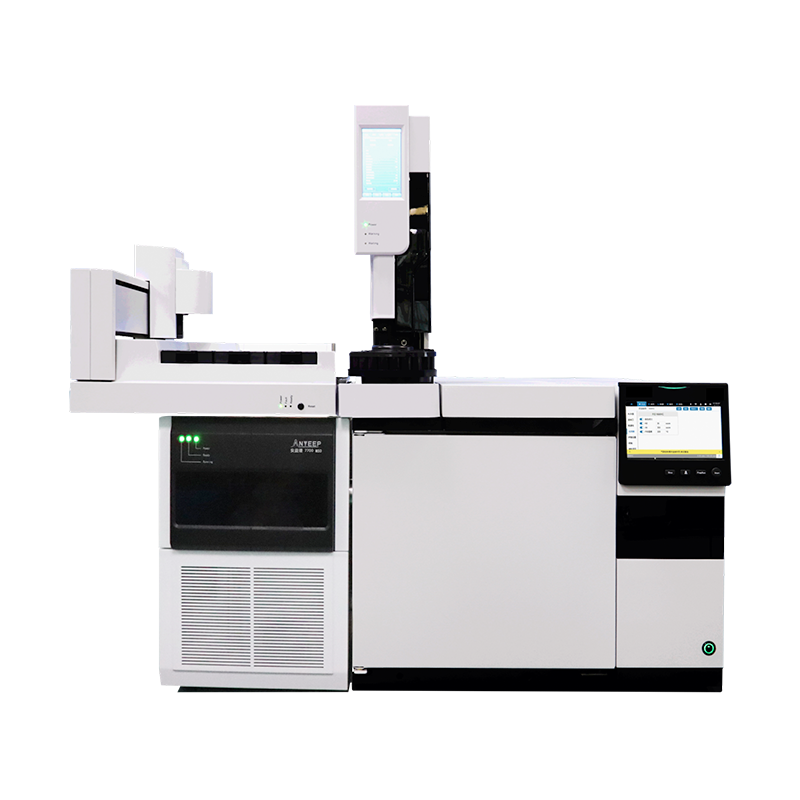
Differences in single quadrupole GC-MS systems are most evident at low concentrations. This article outlines the test conditions required to achieve a limit of detection (LOD) better than 10⁻¹⁴ g (1 pg octafluoronaphthalene, signal-to-noise ratio on m/z 272). It explains the practical implications of this metric for sample preparation and turnaround time, describes how the vacuum system, ion source, mass analyzer, and detector support this performance, and covers CE certification and typical application compatibility.
Single-quadrupole GC-MS systems are among the most frequently used instruments in analytical laboratories. They handle high-volume tasks such as pesticide residue screening, organic compound analysis in water, and occupational health monitoring—benefiting from mature methods, comprehensive spectral libraries, and controllable operating costs. The key differentiator between products often lies not in the mid-concentration range, but at trace levels: can the instrument still deliver reliable qualitative results when analyte signals approach the noise floor? Suzhou Anyeipu's proprietary 7700 series single-quadrupole GC-MS achieves a detection limit better than 10⁻¹⁴ g—a specification that must be evaluated within the context of specific test conditions and system design.
Which concentration range corresponds to 10⁻¹⁴ g?
10⁻¹⁴ g equals 10 fg, or one ten-trillionth of a gram. To measure single-quadrupole sensitivity, the industry standard is to inject 1 pg of perfluorotributylamine and observe the signal-to-noise ratio (S/N) at m/z 272; the limit of detection (LOD) is calculated from the standard deviation of multiple continuous injections. Under these conditions, the 7700 series achieves an S/N of 1500:1 (RMS), with an instrument LOD better than 10 fg of perfluorotributylamine.
These figures are critical for sample pretreatment. When the instrument's minimum detectable concentration drops by one order of magnitude, sample concentration factors, purification steps, and solvent volumes can all be reduced accordingly. This shortens turnaround time per batch and lowers the risk of false negatives for low-level analytes. For third-party testing labs, this directly impacts retest rates and labor utilization.
What components support the metric?
Low limits of detection are not the result of a single step, but rather the product of four key stages: vacuum, ionization, mass analysis, and detection.
The vacuum system features a dual-turbomolecular pump design with independent pumping for the ion source and quadrupole mass analyzer. The two pumping speeds are 90 L/s, with a maximum chromatographic column flow rate of 10 mL/min. Independent pumping allows the ion source to operate at higher pressures while maintaining high vacuum in the mass analyzer, keeping background noise at a low level.
The ion source features a high-temperature inert ceramic design with dual filaments, enabling long-term operation at 350 °C with temperature control accuracy of ±0.1 °C. High temperatures minimize sample residue, while the dual-filament configuration provides redundancy, allowing filament switching without system shutdown.
The mass analyzer is a surface-passivated all-metal quadrupole with integrated pre-quadrupole and main quadrupole rods. It maintains mass axis stability through structural thermal stability rather than heating. Mass stability is ±0.1 amu/48 h, with a mass range of 1.5 to 1250 amu. Scan speed is fully adjustable across the entire range.
The detector uses a 13-pole non-continuous discrete dynode electron multiplier. Its multiplication area is larger than that of channel-type structures, and the manufacturer's stated lifespan is more than three times that of channel-type electron multipliers.
CE Certification and Use-Case Compatibility
The 7700 series is CE certified, meaning it meets EU market requirements for electromagnetic compatibility and electrical safety. This provides verifiable compliance documentation for purchasers who require it.
In application, environmental monitoring focuses on trace organics in water and soil; food safety targets pesticide residues and additives; and research scenarios prioritize metabolite identification and unknown characterization. These tasks share common challenges: complex matrices and wide concentration ranges. A single quadrupole system with SCAN/SIM switching capability, combined with NIST library search, enables a complete workflow from screening to confirmation.