Determination of Short-Chain Fatty Acids Using the AnYiPu TQ8100 Triple Quadrupole Gas Chromatograph-Mass Spectrometer
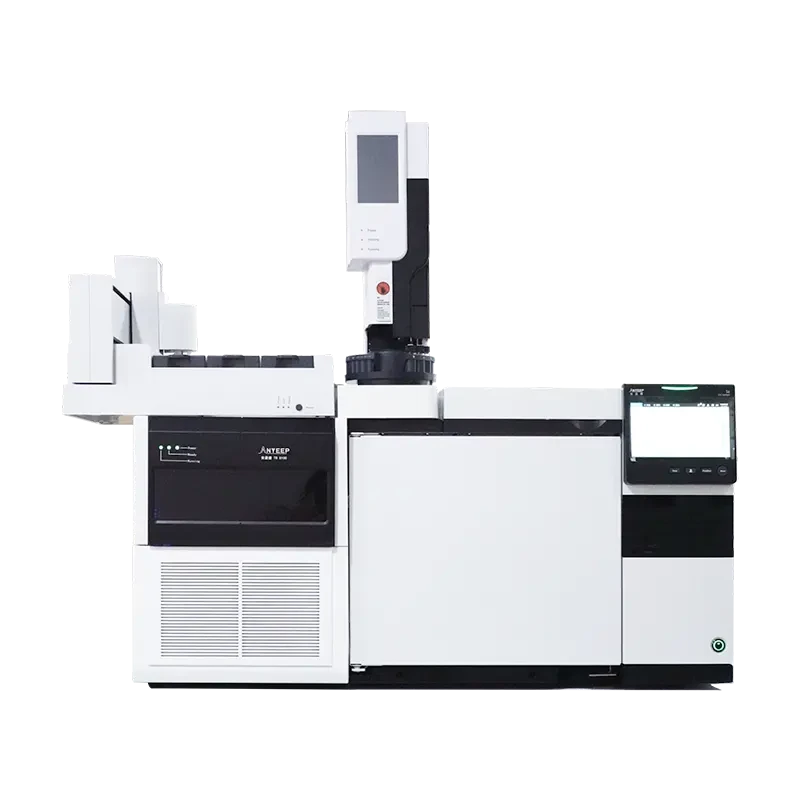
Humans lack sufficient enzymes to degrade large amounts of dietary fiber. Undigested dietary fiber ferments to produce short-chain fatty acids (SCFAs), primarily in the colon. SCFAs not only provide energy to colon mucosal cells and promote their metabolism and growth, but also lower colonic pH, inhibit harmful bacteria growth, prevent gut dysfunction, suppress pro-inflammatory factors, and mitigate colon inflammation. Additionally, they inhibit tumor bacterial proliferation, regulate proto-oncogene expression, promote tumor cell differentiation and apoptosis, and exert anti-tumor effects. The specific types and quantities of SCFAs determine their distinct biological impacts. Therefore, establishing the relationship between SCFA profiles (types and concentrations) and human health is crucial. Due to their low molecular weight and boiling points, gas chromatography-mass spectrometry (GC-MS) with excellent qualitative capabilities and high sensitivity serves as an ideal tool for SCFA analysis. However, complex matrices in human blood and feces require robust interference resistance; thus, triple quadrupole GC-MS is better suited for these samples. This study established a method using the AYS TQ8100 triple quadrupole GC-MS system to quantify 7 SCFAs: acetic acid, propionic acid, isobutyric acid, butyric acid, isovaleric acid, valeric acid, and hexanoic acid. Isohexanoic acid served as the internal standard. Qualitative identification was performed using SCAN mode with library search, based on retention time, mass spectra, and characteristic ion pairs. Quantification was achieved via MRM mode using external calibration curves and internal standardization, demonstrating excellent linearity.
Experimental Conditions
gas phase conditions
Injection volume: 1µL; Injection mode: Split; Split ratio: 10:1; Column flow rate: 1mL/min; Carrier gas: He; Collision
Collision gas: Argon 2 2 PSI; Inlet temperature: 250°C
Column: HP-INNOWAX 30m × 0.25mm × 0.25µm, constant flow mode
Column oven temperature program: 60°C (1 min) 20°C/min 250°C (2 min)
Mass Spectrometry Conditions
Transfer line temperature: 250°C; Ion source temperature: 240°C; Solvent delay: 4 min; Multiplier voltage: 1300 V;
Scan Mode: Multiple Reaction Monitoring (MRM)
Experimental Results
Total ion chromatogram of short-chain fatty acids. Solutions of 0.02, 0.1, 0.5, 1, 2, 5, 10, 25, 50, and 100 μg/mL were prepared in n-butanol. Multiple reaction monitoring (MRM) was used for scanning. All linear correlation coefficients (r²) were ≥ 0.995, indicating excellent linearity.
Human blood, feces, and other complex matrix samples are better analyzed using triple quadrupole gas chromatography-mass spectrometry (GC-MS) due to its superior resistance to interference.