Where the bottleneck lies in replacing domestic triple quadrupole GC-MS instruments
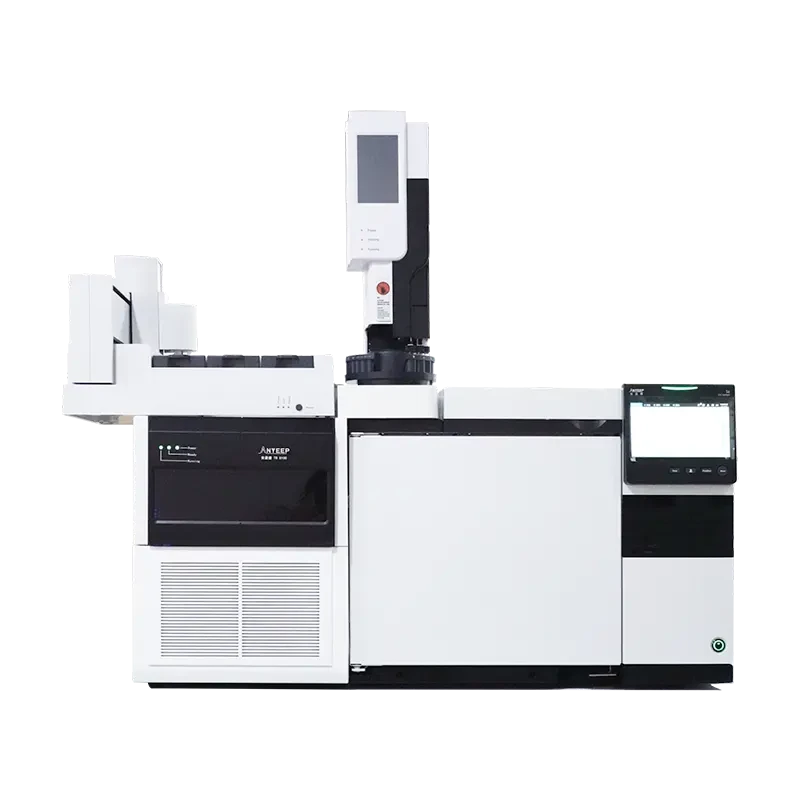
The key challenges in replacing domestic triple quadrupole GC-MS systems lie in components that directly determine data quality: the ion source, mass analyzer, and collision cell. Using the ANYEEP TQ8120 as an example, this article explains how ion source ionization efficiency and anti-contamination design, dual-curved four-pole rods, and a 180° collision cell affect selectivity and cross-talk; discusses long-term stability and local service response; and outlines four criteria to determine whether a true replacement has been achieved.
Trace quantification has long relied on imported triple quadrupole GC-MS/MS systems. Labs demand two things: reliable detection and reproducible results. This is also the core challenge for domestic substitution. Assembling the housing, gas lines, and software is straightforward; the real difficulty lies in whether critical components that directly determine data quality—such as the ion source, mass analyzer, and collision cell—are under your own control. Suzhou Anyeep's ANYEEP TQ8120 takes a bottom-up approach, ensuring every aspect of the instrument's performance traces back to proprietary design.
Ion Source: High ionization efficiency and contamination resistance must coexist.
The ion source is the first stage where samples enter the mass spectrometer, and its condition directly impacts signal response. The TQ8120 features an optimized electron impact (EI) ion source that uses electrons to ionize neutral molecules. By fine-tuning filament positioning and acceleration voltage, we maximize ionization efficiency, delivering stronger signals for target analytes at the same concentration.
Another challenge with complex matrix samples is contamination. High-boiling components in food extracts and environmental water samples tend to deposit inside the ion source, causing signal drift and increasing cleaning frequency. We apply inert coatings to the ion source surface and improve internal temperature uniformity, ensuring consistent ionization efficiency for high-boiling compounds regardless of position. The modular design allows entire source units to be swapped out during maintenance, reducing downtime from days to hours.
Quadrupole and Collision Cell: Selectivity vs. Crosstalk
The machining precision of the quadrupole determines mass axis stability. TQ8120 employs self-manufactured hyperbolic quadrupoles paired with a proprietary RF power supply, ensuring minimal mass axis drift over extended operation and more accurate isotope ratio measurements. Multi-residue screening often requires simultaneously monitoring hundreds of ion pairs; even slight compromises in mass accuracy can undermine qualitative conclusions.
The collision cell is responsible for fragmenting precursor ions and selecting product ions. The TQ8120 features a 180° curved collision cell design, achieving neutral particle elimination efficiency exceeding 99.5%, which significantly reduces background noise at the detector. Collision gas pressure and path length are optimized to enhance product ion yield and minimize cross-talk between channels during simultaneous multi-channel acquisition. Coupled with an electron multiplier, the system achieves detection limits in the femtogram range (fg, 10⁻¹⁵ g) and a dynamic range spanning over 7 orders of magnitude, enabling accurate quantification of both low- and high-abundance samples within a single method.
Stability is reflected in long-term data.
Samples from third-party labs and pharmaceutical companies arrive continuously, with instruments running 10+ hours daily. Stability must be evaluated based on retention time and response repeatability during continuous injection; factory-day specifications alone are insufficient. A key advantage of our in-house core components is seamless integration: the ion source, quadrupole, and collision cell share a unified design framework. This eliminates compromises due to off-the-shelf part limitations, reduces overall system drift, and enables more robust engineering validation.
Service radius determines the actual availability of the device.
After-sales support for imported equipment is a well-known industry pain point. Sourcing parts from overseas often involves weeks of lead time, and method development support faces scheduling delays. TQ8120 leverages our local service network to promise a 24-hour response to service requests, provide free on-site training, and offer complimentary上门 repairs with non-consumable spare part replacements during the warranty period. For laboratories that generate daily reports, even a small difference in response time translates directly into lost productivity.
Alternative metrics
Determining whether a domestic GC-MS/MS system has achieved true import substitution comes down to four key criteria: Can core components be manufactured locally? Are long-term results reproducible? Can issues be resolved quickly? And can methods be implemented effectively in the local lab? The TQ8120 addresses these four points across applications including food pesticide screening, environmental volatile and semi-volatile organic compound monitoring, drug impurity testing, and industrial raw material quality control. Ultimately, the progress of domestic precision instruments is measured by the data generated in the laboratory.