Method for Detecting 4 Flame Retardants in Water Using Liquid Chromatography-Mass Spectrometry
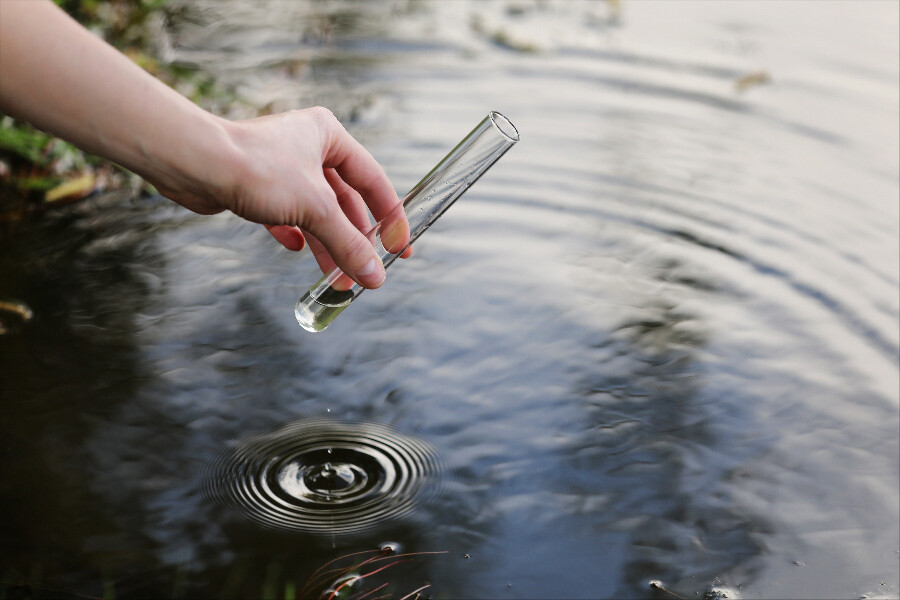
This study employed the Anyeep TQ9120 ultra-high-performance liquid chromatography-tandem mass spectrometry system from Anyeep to develop a method for quantifying tetrabromobisphenol A and 3 hexabromocyclododecanes in water. The method demonstrated excellent linearity, with limits of detection and quantification meeting relevant regulatory standards. Using this method and equipment enables the detection and quantification of 4 flame retardants in water.
Introduction
Tetrabromobisphenol A is a reactive flame retardant. On 2017 10, 27, the International Agency for Research on Cancer (IARC) of the World Health Organization classified tetrabromobisphenol A as a Group 2A carcinogen.
Hexabromocyclododecane (HBCD) is an additive flame retardant. This compound has been listed in China's Catalog of Toxic Chemicals Subject to Strict Control and reviewed by the Stockholm Convention Expert Committee as a persistent organic pollutant (POP). China implemented a ban on HBCD production, use, import, and export starting from 2021/12/26. Any stockpiles must be disposed of as hazardous waste after 2021 years.
This article is based on theHY/T 261-2018 Determination of Hexabromocyclododecane in Seawater by High-Performance Liquid Chromatography-Tandem Mass Spectrometry》requirements, we developed a method to simultaneously detect 4 flame retardants in water samples.
Instruments and Reagents
Anyeep TQ120 Ultra-high-performance liquid chromatography-tandem mass spectrometrySystem
Acetonitrile, Methanol(Thermo Fisher Scientific, USA)
Ammonium fluoride (analytical grade, Merck KGaA, Germany)
n-Hexane, Dichloromethane (HPLC Grade, CNW Technologies GmbH, Germany)
Standards and Internal Standards (Shanghai Anpel)
HLB Solid-Phase Extraction Cartridge (Shanghai ANPEL, SBEQ-CA6685)
Liquid Chromatography Conditions
Mobile PhaseA: 0.2 mM ammonium fluoride, water
Mobile Phase B: Acetonitrile
Chromatography column: Waters Acquity UPLC BEH C18, 1.7μm, 2.1×100 mm
Column Warm: 40 ℃
Flow rate: 0.3 mL/min
Injection volume:5μL
Mass Spectrometry Conditions
Ionization Source: Electrospray Ionization Source (ESI)-)
Source Warm degree: 550 ℃
Spray Voltage: 4500 V
Qi curtain Qi: 45psi
Fog Qi: 70psi
Assist Help Qi: 90psi
Clap Crash Qi: 12
Scan Mode:MRM
Gradient elution program
Time min | A % | B % | Flow RatemL/min |
0.0 | 50 | 50 | 0.3 |
0.5 | 50 | 50 | 0.3 |
2.5 | 20 | 80 | 0.3 |
8.0 | 5 | 95 | 0.3 |
8.5 | 5 | 95 | 0.3 |
8.6 | 50 | 50 | 0.3 |
10.5 | 50 | 50 | 0.3 |
Analyte MRM Parameters
Test Item | Q1 Ion | Q3 Ion | CE(V) | DP(V) |
Tetrabromobisphenol A | 542.7 | 417.9* | 45 | 85 |
alpha-/beta-/gamma-Hexabromocyclododecane | 640.6 | 79.1 | 45 | 85 |
640.6 | 81.1* | 45 | 85 | |
Tetrabromobisphenol A-13C12 | 555.0 | 429.9 | 40 | 100 |
Note: * indicates quantification ion pairs
Sample Processing
Measure 9.7 mL of water sample and add 100.μL 50 ng/mL mixed isotope internal standard, 100μL standard solutions at various concentrations and 100μL-formic acid, mix thoroughly to prepare matrix-spiked samples with a final concentration of 0.05-500 ng/mL. Following 0.22μmAfter filtration through the membrane, load onto a pre-activated SPE cartridge (conditioned sequentially with 10 mL n-hexane, 10 mL dichloromethane, and a mixture of 10 mL methanol and 10 mL water). Wash with 10 mL methanol and dry under vacuum. Elute sequentially with 2 mL methanol followed by 5 mL dichloromethane. Evaporate the eluate to near dryness under a nitrogen stream, reconstitute in acetonitrile to a final volume of 1 mL, and use for standard curve, accuracy, and precision determination. 5μL injection analysis.
Measure 9.8 mL of water sample and add 100.μL 50 ng/mL Mixed Isotope Internal Standard and 100μL-formic acid, mix well, via 0.22μmAfter membrane filtration, perform the same steps as above for sample determination. 5μL injection analysis.
Linear Range
Test Item | Retention Time min | Limit of Detection ng/mL | Linear Range ng/mL | Linear Equation 1/x | correlation coefficient r2 |
Tetrabromobisphenol A | 4.66 | 0.05 | 5-500 | Y = 0.0653891* X - 0.231362 | 0.9957 |
alpha-Hexabromocyclododecane | 6.18 | 0.5 | 1-500 | Y = 0.00716333 * X + 0.0101863 | 0.9959 |
β-Hexabromocyclododecane | 6.50 | 0.2 | 1-500 | Y = 0.0213981 * X + 0.0210463 | 0.9953 |
gamma-Hexabromocyclododecane | 7.06 | 0.2 | 1-500 | Y = 0.0141912 * X + 0.0153164 | 0.9963 |
Precision and Accuracy/Recovery
Test Item | background ng/mL | Add label ng/mL | 1 | 2 | 3 | 4 | 5 | 6 | Precision | Accuracy/Recovery Rate |
Tetrabromobisphenol A | 11.16 | 5 | 16.41 | 16.30 | 15.99 | 16.16 | 16.32 | 16.58 | 1.25% | 100.83% |
| 11.16 | 50 | 56.65 | 63.65 | 62.26 | 63.57 | 62.79 | 60.68 | 4.31% | 100.72% |
alpha-Hexabromocyclododecane | 0.00 | 2 | 2.17 | 2.34 | 2.09 | 2.11 | 1.98 | 2.01 | 6.11% | 105.83% |
| 0.00 | 50 | 53.29 | 51.06 | 48.57 | 49.60 | 51.51 | 51.34 | 3.22% | 101.79% |
β-Hexabromocyclododecane | 0.36 | 2 | 2.25 | 2.50 | 2.13 | 2.44 | 2.18 | 2.40 | 6.51% | 98.58% |
| 0.36 | 50 | 54.00 | 47.40 | 52.60 | 51.40 | 51.20 | 48.20 | 5.00% | 100.87% |
gamma-Hexabromocyclododecane | 0.35 | 2 | 2.10 | 2.46 | 2.22 | 2.33 | 2.01 | 2.13 | 7.36% | 93.97% |
| 0.35 | 50 | 52.40 | 52.06 | 53.15 | 52.23 | 53.74 | 50.52 | 2.09% | 103.95% |
Note: Values below the limit of detection are recorded as 0.00 ng/mL.
Summary
This document establishes Anyeep TQ9120 Ultra-High Performance Liquid Chromatography-Tandem Mass Spectrometry SystemMethod for analyzing 4 flame retardants in water samplesAs the results show,The method exhibits excellent sensitivity, stability, and a wide linear range.The relevant indicators meet the required standards.Suitable forFlame retardants in water samplesRoutine analysis and testing.