A single-injection trace detection method for 11 perfluorinated compounds in water
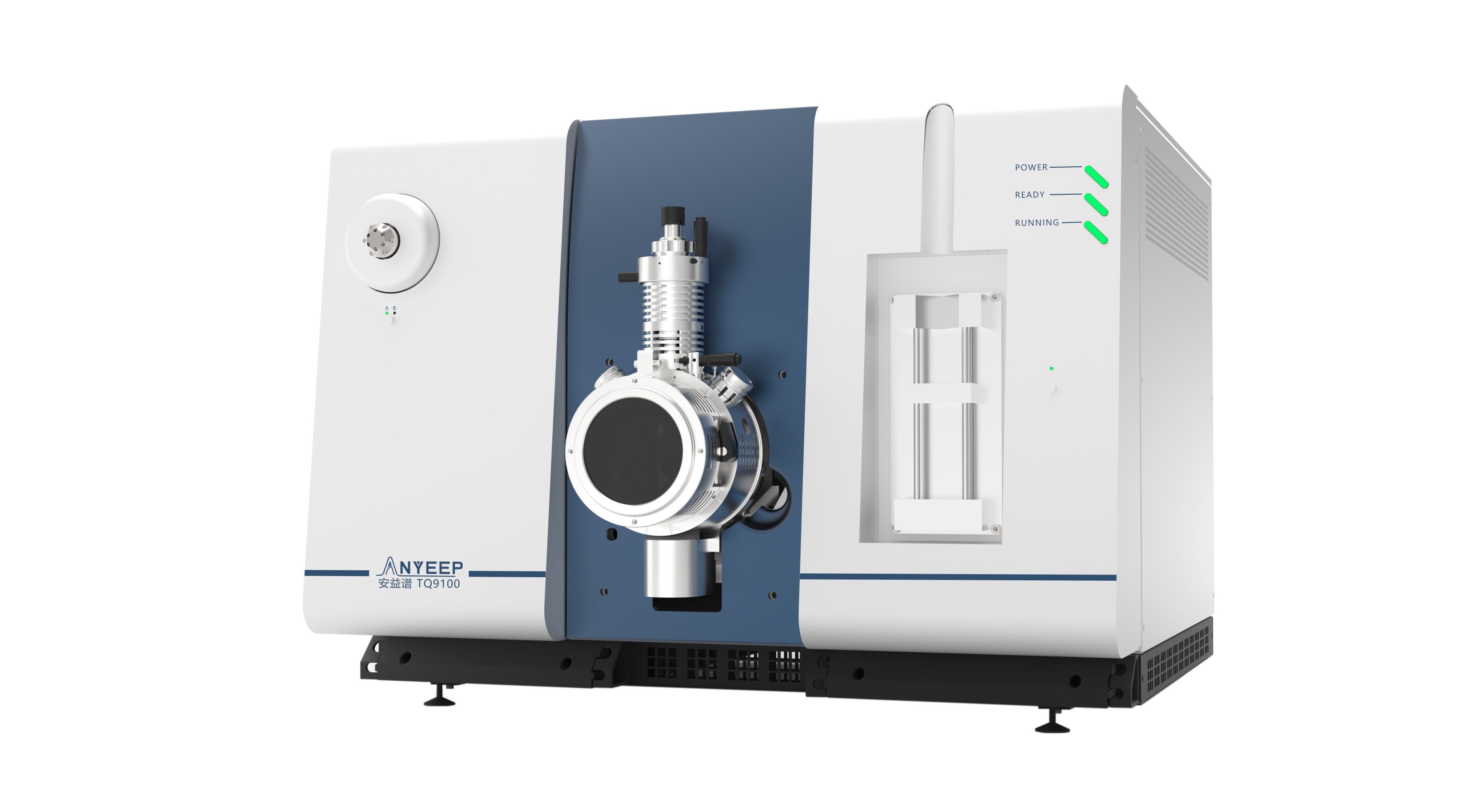
Regulatory limits for perfluoro compounds (PFCs) in drinking water are set in μg/L, yet monitoring often requires detection at ng/L levels. This demands a method that excels in enrichment, separation, and background control. Using the TQ9100 UPLC-MS/MS system, this paper outlines solid-phase extraction enrichment, gradient separation, mass spectrometry acquisition parameters, method validation metrics, and key strategies for controlling background contamination for 11 PFCs in water.
Per- and polyfluoroalkyl substances (PFAS) are persistent in the environment and bioaccumulate through the food chain. The 2023 Drinking Water Quality Standard set limits for perfluorooctanoic acid (PFOA) and perfluorooctanesulfonic acid (PFOS) at 0.08 μg/L and 0.04 μg/L, respectively. GB/T 5750.8-2023, Part 8 of the "Standard Methods for Examination of Drinking Water – Organic Parameters," provides a detection protocol for 11 PFAS compounds. While regulatory limits are expressed in μg/L, actual monitoring often requires sensitivity down to ng/L; thus, methods must simultaneously achieve effective enrichment, separation, and background control. Leveraging the TQ9100 ultra-high-performance liquid chromatography-tandem mass spectrometry system, we developed a simultaneous quantification method for these 11 target analytes.
11 target types, challenging due to wide property variations
This method covers C4 to C10 carboxylic and sulfonic acids: perfluorobutyric acid, perfluoropentanoic acid, perfluorohexanoic acid, perfluoroheptanoic acid, perfluorooctanoic acid, perfluorononanoic acid, perfluorodecanoic acid, as well as perfluorobutanesulfonic acid, perfluorohexanesulfonic acid, perfluoroheptanesulfonic acid, and perfluorooctanesulfonic acid. Short-chain components are highly polar, exhibit weak retention on conventional C18 columns, and tend to elute with the solvent front. Long-chain components are strongly hydrophobic, prone to adsorption on vial walls and tubing, leading to low recovery rates. A single gradient must balance both resolution and peak shape for these two groups.
Method skeleton: solid-phase extraction with gradient elution
Take a 1 L water sample, add 4.625 g ammonium acetate, and adjust the pH to 6.8–7.0 with acetic acid. Add isotopic internal standards at the specified ratio. Activate the weak anion exchange solid-phase extraction (SPE) column sequentially with 0.1% ammonia-methanol, methanol, and ultrapure water. Pass the water sample through the column at approximately 8 mL/min. After loading, rinse with 5 mL of 25 mmol/L ammonium acetate solution (pH 4.0) followed by 10 mL of ultrapure water. Dry under vacuum for 10 min, then elute with 5 mL methanol and 7 mL of 0.1% ammonia-methanol. Evaporate the eluate to near dryness using nitrogen blow-down at temperatures below 40°C. Reconstitute with methanol-water (3:7, v/v) to a final volume of 1 mL, filter through a 0.22 μm membrane, and inject.
The liquid chromatography conditions were as follows: C18 column (1.7 μm, 2.1 × 100 mm), column temperature 40°C, flow rate 0.35 mL/min. Mobile phase A was 5 mmol/L ammonium acetate in water, and mobile phase B was methanol; separation was achieved via a gradient elution over 9 min. Mass spectrometry was performed using electrospray ionization (ESI) in negative mode with multiple reaction monitoring (MRM). The spray voltage was -4500 V, and the ion source temperature was 450–550°C. Each compound was identified by one pair of quantitative ions and one pair of qualitative ions, confirmed based on retention time and ion abundance ratios.
The instrument addresses stability at low concentrations.
At ng/L levels, 11 target analytes face amplified response variations and background interference. The TQ9100 ion source uses a 90° orthogonal spray to reduce droplets and neutral molecules entering the mass spectrometer; the 180° collision cell with axial acceleration minimizes neutral particle interference and crosstalk between adjacent MRM transitions. The tandem metal quadrupoles ensure unit mass resolution, allowing stable switching of up to 11 ion pairs within a single method. For large-scale water sample batches, long-term repeatability during extended operation impacts results more than single-injection sensitivity, making it a prerequisite for routine monitoring.
Methodology Metrics and Acceptance Criteria
Method validation follows these criteria: correlation coefficients for 11 target analytes across their respective linear ranges must be ≥0.998, and recovery rates at low, medium, and high spike levels must fall within 70%–120%. According to a 2024 study in *Wei Sheng Yan Jiu* (Health Research), the WAX column enrichment-UPLC-MS/MS method achieved limits of detection (LOD) for 11 perfluorinated compounds ranging from 0.03 to 0.7 ng/L, limits of quantification (LOQ) from 0.5 to 3.0 ng/L, recoveries of 80.0%–130.0%, and relative standard deviations (RSD) of 1.27%–10.51%. These performance metrics align with the current method, which requires approximately 9 minutes per injection.
Once the method is implemented for routine monitoring, include at least one full-process blank and one laboratory blank per batch; blank values must be below the detection limit. Insert one duplicate sample and one matrix spike every 20 samples, and maintain internal standard recovery within 40%–160%.
Background contamination is even easier to overlook than instrument errors.
PFAS is widely present in fluoropolymer vessels, filters, and tubing; even minor lapses during sample preparation can introduce false positives. Use polypropylene sampling and autosampler vials—avoid PTFE and glassware. Filter water samples with polypropylene or cellulose acetate membranes. If the liquid chromatography system contains fluorinated components, install a delay column between the injection needle and the analytical column to separate system background from target analytes by retention time. Perform reagent blanks, method blanks, and replicate injections as mandatory steps, not as corrective actions after issues arise.