On-Site Screening and Laboratory Confirmation with Portable Mass Spectrometry: A Traceable Chain of Evidence
Environmental monitoring and customs quarantine face the same structural challenge: samples are present, answers must be fast, but conclusions cannot stop at speed. Field screening and laboratory confirmation are not independent processes; they form two segments of a single evidence chain. The first determines which samples warrant confirmatory resources, while the second validates whether those initial judgments can become admissible conclusions. How smoothly this link functions directly determines the practical usability of any mass spectrometry solution in real-world operations.
The on-site screening answer is "whether to pull them over".
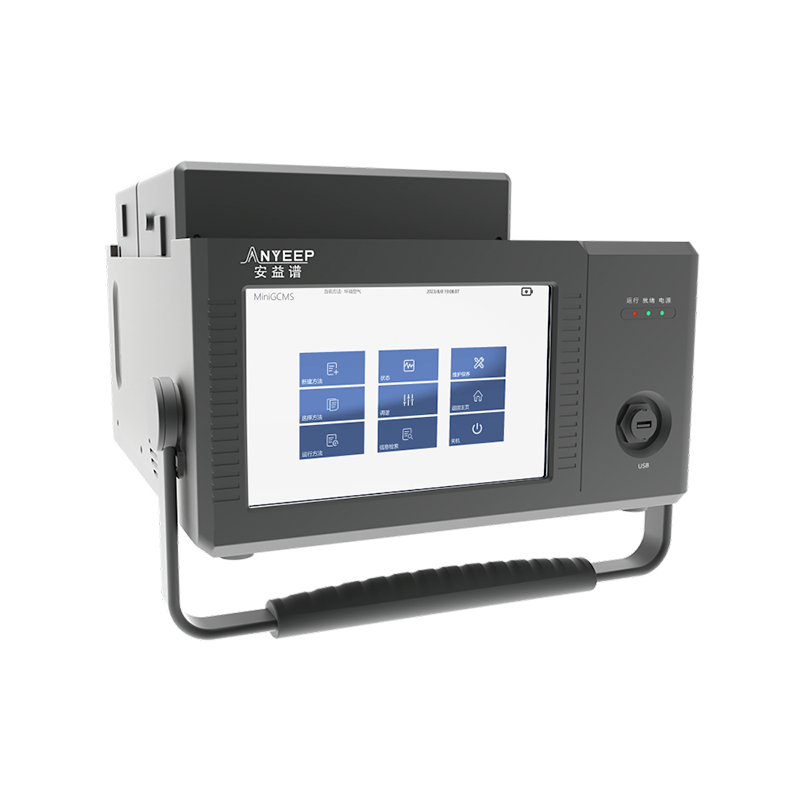
Portable mass spectrometers bring mass spectrometry analysis from the lab bench to the sampling site, shifting critical decision-making earlier in the process. When water quality anomalies occur, foul odors are detected at facility boundaries, or suspicious batches are identified in inbound/outbound shipments, users need directional conclusions within minutes to decide whether to escalate samples or hold cargo. Such decisions rely on two factors: whether the instrument can deliver stable peaks in uncontrolled environments and whether the method covers trace levels of target analytes.
Mobile deployment faces challenges from matrix interference and instrument drift. Sampling conditions—temperature, power supply, and vibration—differ significantly from the lab. Consequently, portable mass spectrometer development prioritizes the sample introduction interface, vacuum stability, and spectral library matching strategies. Our design review standard is straightforward: qualitative results for the same sample must match whether acquired on a vehicle or in the lab. If this isn't met, speed becomes irrelevant.
Laboratory confirmation answers whether the conclusion is usable.
Screening yields presumptive results; confirmation provides legally defensible data. Regulatory enforcement, environmental quality assessment, and customs clearance all require the latter. GC-MS and LC-MS are the workhorses of confirmation because they deliver two orthogonal dimensions: chromatographic retention time for separation and mass spectral fragments for structural identification. Only when both align can qualitative results be trusted. Quantification relies on calibration curves, internal standards, and quality control samples; without all three, data remains only a reference value.
Matrix complexity dictates the extent of sample preparation. Soil and surface water samples contain numerous co-existing components, and extracts from agricultural products and food-contact materials are equally complex. The choice of chromatographic conditions and purification steps directly determines whether low-level target analytes can be detected. Most of the confirmation phase's time cost is spent here, not on instrument data acquisition itself.
Three interfaces across two links
The first interface is for samples. Field screening must retain sufficient duplicate samples and complete raw records, including sampling locations, times, containers, and preservation conditions. The confirmatory lab receives not just a liquid sample, but a reproducible process.
The second interface handles data. Screening and confirmation spectra must be linked by sample ID, with acquisition time, instrument status, and method version recorded. Without this linkage, on-site alerts become untraceable once they reach the lab.
The third interface is a method. The target list for screening methods must align with the coverage of confirmation methods; otherwise, discrepancies between field alarms and laboratory results are likely to occur. The reliability of method transfer depends on whether the mass analyzer characteristics and scan modes of both instruments are clearly documented.
Deployment forms of environmental monitoring
Environmental monitoring sites are scattered and time-sensitive. Water analysis focuses on sudden pollution events and routine indicator anomalies; air pollutant detection targets fugitive emissions and odor source tracing; soil applications are primarily used for initial site screening and remediation monitoring. These three tasks share a common characteristic: not every sample requires confirmatory testing. Portable instruments perform initial site screening first, directing limited confirmatory capacity toward high-risk samples. This is fundamentally a resource allocation decision, unrelated to trade-offs in accuracy.
Physical implementation of customs quarantine
High volume of import/export shipments and costly delays. Screening identifies potential prohibited or anomalous batches for initial assessment; confirmation provides the basis for disposal decisions. Accelerating customs clearance focuses confirmation testing only on samples that truly require it, creating room to compress clearance timelines.
This scenario demands additional instrument capabilities: ease of use and traceable results. Field personnel may lack analytical chemistry expertise; therefore, the interface logic and workflow prompts must minimize reliance on individual experience while ensuring every action is logged. In deployments for such scenarios, we prioritize method templates and role-based access control equally with sensitivity.
Conclusion
Fast on-site, accurate in-lab—there should be no gap between them. Suzhou Anyipu's GC-MS, LC-MS, and portable mass spectrometers share the same R&D lineage, enabling seamless method transfer and cross-validation of spectral data. This is the technical foundation for a true collaborative workflow. For users, the real question during selection isn't whether to choose portable or benchtop; it's whether every link in the evidence chain has corresponding instrumentation and methods to support it.