Environmental Monitoring Station Selection Dilemma: How Portable Mass Spectrometers Solve Trace Detection Challenges
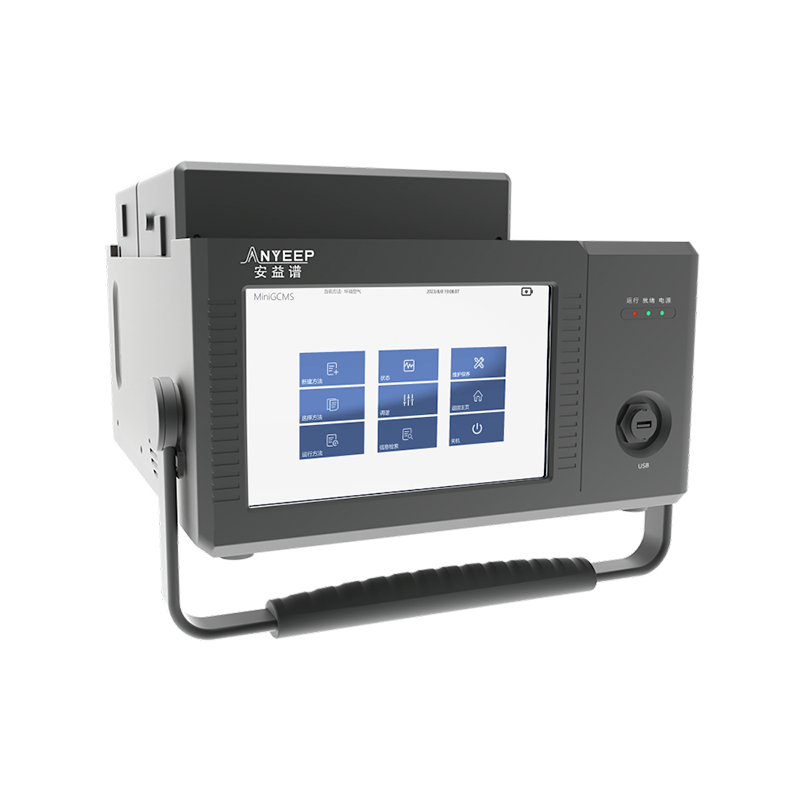
Equipment selection for environmental monitoring stations balances accuracy, efficiency, and usability. Traditional laboratory mass spectrometers often take days from sampling to reporting, making them ill-suited for sudden pollution events. This article outlines the three key challenges in on-site trace detection, explains how portable mass spectrometers address sensitivity, analysis speed, and operational complexity, and provides guidance on use cases and selection criteria for water and air monitoring.
Selecting equipment for environmental monitoring stations involves balancing accuracy, efficiency, and operability. While traditional lab-based mass spectrometers offer high sensitivity, delays caused by sample transport, pre-processing, and instrument warm-up often extend the time from sampling to reporting by several days. In cases of sudden water pollution or abnormal atmospheric emissions, this lag can compress or even eliminate critical decision windows.
The Triple Contradiction of On-Site Inspection
The selection challenges faced by environmental monitoring stations can be categorized into three dimensions.
The first challenge is the trade-off between sensitivity and portability. Laboratory mass spectrometers achieve detection limits as low as parts-per-trillion (ppt), but their large size and strict environmental requirements prevent on-site deployment. While portable devices address space constraints, they often compromise core metrics like ionization efficiency and mass resolution, reducing their ability to detect trace substances.
Second, there is a trade-off between analysis speed and data quality. On-site rapid screening typically relies on semi-quantitative methods like test strips and portable photometers, which deliver results within minutes but cannot provide qualitative confirmation. These methods lack reliability when the target analytes require precise molecular identification of volatile organic compounds (VOCs) or polycyclic aromatic hydrocarbons (PAHs).
Third is the conflict between operational complexity and staffing constraints. Operating mass spectrometers typically requires specialized training, yet grassroots environmental monitoring stations face limited technical staff and cannot afford dedicated analysts. If the equipment is too complex, actual usage rates will fall far below procurement expectations.
Why is mass spectrometry well-suited for on-site trace detection?
The core advantage of mass spectrometry lies in the "mass-to-charge ratio" (m/z)—a physical property intrinsic to molecules, independent of color changes from chemical reactions or drift in electrical signals. This ensures higher confirmatory power, enabling the differentiation of isomers and identification of unknown pollutants.
Miniaturizing and deploying mass spectrometry in the field requires solving key engineering challenges: ion source stability (field environments experience far greater vibration and temperature fluctuations than labs), miniaturization of vacuum systems (traditional molecular pumps are bulky and power-hungry), and automation of data acquisition and analysis (to minimize manual intervention). The extent to which these bottlenecks are overcome determines whether portable mass spectrometers can truly replace the traditional "sample-collect-ship-lab-wait-for-report" workflow.
Trace Analysis Capability of Aniyipu Portable Mass Spectrometer
Suzhou Anyipu's technical expertise in portable mass spectrometry is reflected in its systematic approach to addressing the engineering challenges outlined above.
In water quality testing, a key challenge is matrix interference—dissolved organic matter and inorganic salts in water samples compete with target pollutants for ionization efficiency. The Anyspu portable mass spectrometer maintains detection capability for trace organic pollutants even in complex matrices by optimizing ionization parameters and mass filtering strategies. For common targets such as benzene derivatives, chlorinated hydrocarbons, and pesticide residues found in surface water and industrial wastewater, the device performs end-to-end analysis—from sampling to qualitative and quantitative assessment—on-site, with detection limits meeting environmental monitoring standard methods.
In atmospheric monitoring, device response speed and gas sampling efficiency are critical. The AnySpec portable mass spectrometer supports direct injection or thermal desorption pre-concentration, enabling screening and confirmation of airborne VOCs within minutes. For boundary monitoring of chemical parks or emergency source tracing of sudden air pollution events, this capability compresses analysis cycles from days to hours.
Simplified workflow design
The real value of a device depends not only on its technical specifications but also on whether operators can reliably reproduce them in actual field conditions. The AnYiPu portable mass spectrometer is designed to minimize the impact of human variability on data quality.
During sampling, water quality is analyzed by collecting samples in standard bottles and injecting them directly, while air quality is measured using sampling tubes or Summa canisters to collect gas samples—no complex on-site pretreatment is required. Once the instrument is powered on, the system automatically establishes vacuum conditions and performs parameter calibration; operators simply select the appropriate detection method template. During data acquisition, the built-in spectral library matching algorithm compares the acquired mass spectrum with reference spectra to provide qualitative identification and concentration estimates. The entire workflow, from startup to report generation, typically takes 30 minutes.
This design lowers the operational barrier—field technicians at grassroots monitoring stations can operate independently after brief training, without requiring on-site support from mass spectrometry experts.
Pragmatic Considerations in Technology Selection
When evaluating portable mass spectrometers, environmental monitoring stations should focus on key metrics: whether the limit of detection for target pollutants meets local emission or ambient quality standards, if single-run analysis time aligns with emergency response time windows, and whether maintenance intervals and consumable costs fit within the budget.
The AnYiPu portable mass spectrometer's technical approach strikes an engineering balance between trace detection capability and field operability. It is not intended to replace high-precision laboratory mass spectrometry, but to fill the gap in "rapid on-site confirmation"—enabling monitoring stations to obtain reliable data immediately during sudden pollution incidents, rather than waiting days for lab reports.