How portable mass spectrometers enable rapid contraband screening and expedited customs clearance: A step-by-step operational workflow
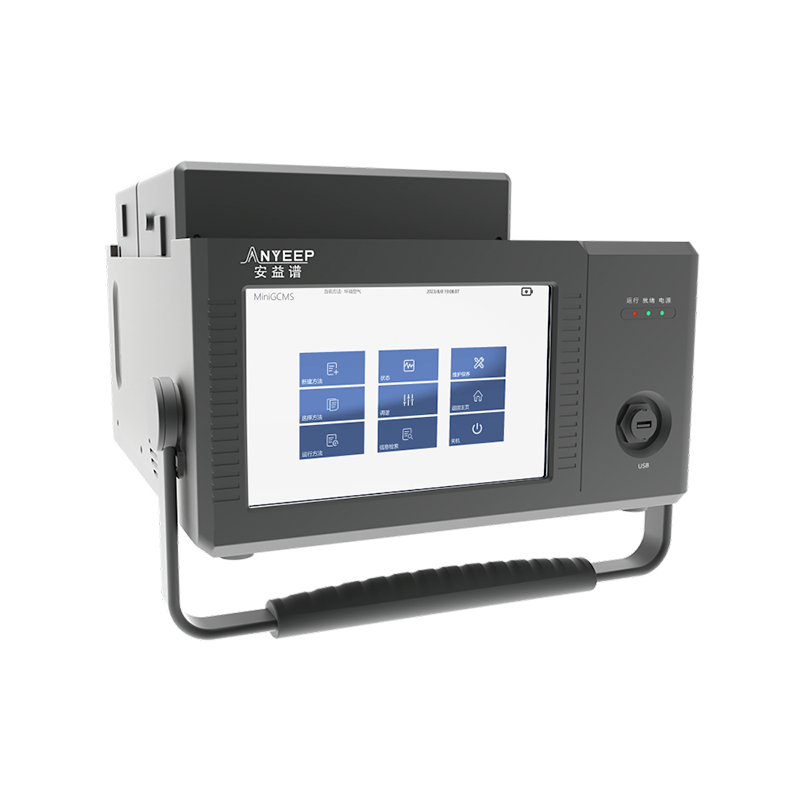
Customs quarantine requires high-precision testing within strict time limits, but traditional sample submission methods are too slow. Portable mass spectrometers bring lab-grade trace detection capabilities directly to port sites. This article breaks down the practical workflow for screening prohibited items using portable mass spectrometry in customs quarantine scenarios, covering sampling, sample preparation, instrument analysis, and result interpretation. It also reviews key performance metrics including detection sensitivity, analysis speed, and database coverage.
The core challenge of customs quarantine is achieving high-precision detection within limited time. Traditional lab testing requires sample submission, pre-processing, and instrument analysis—a process taking hours or even days. With growing import-export volumes, this approach has become a bottleneck for clearance efficiency. Portable mass spectrometers bring laboratory-grade trace detection capabilities directly to port sites, offering a new technical pathway for contraband screening and rapid clearance.
Technical Principles and Device Capabilities
The core capability of a portable mass spectrometer is to perform molecular-level qualitative analysis on-site. The device ionizes sample molecules using an ion source, separates ions by mass-to-charge ratio via a mass analyzer, and records the resulting mass spectrum with a detector. Operators compare the spectrum against the built-in database to obtain results within minutes.
Suzhou Anyipu's portable mass spectrometer supports both Gas Chromatography-Mass Spectrometry (GC-MS) and direct injection modes. GC-MS is ideal for precise identification of volatile and semi-volatile organic compounds, while direct injection enables rapid screening of solid or liquid samples. Weighing within a portable range and equipped with a built-in battery for continuous operation, the device meets the demands of extended on-site operations at ports and borders.
Step-by-step operational breakdown
The practical workflow for contraband screening consists of four steps: sampling, sample preparation, instrument analysis, and result determination.
During sampling, operators extract representative samples from cargo under inspection based on risk control directives or random selection rules. Sample types include powders, liquids, solids, and other forms. The sample size typically ranges from milligrams to grams, depending on the subsequent analysis method.
Sample pretreatment varies by form. Liquid samples can be injected directly or after simple dilution; solid samples may require grinding, dissolution, or extraction. Portable devices offer the advantage of minimal pretreatment needs, often simplifying operations or eliminating complex steps in most scenarios.
During the instrument analysis phase, operators introduce the processed sample into the mass spectrometer. The device automatically performs ionization, separation, and detection to generate a mass spectrum. A single analysis typically takes 1-5 minutes, depending on the target analyte and analysis mode.
In the result evaluation stage, the device's built-in software matches the measured mass spectrum against standard spectra in the database and provides a similarity score. Operators use this score along with their expertise to determine whether the sample contains prohibited substances. For positive results, samples must be sent to the laboratory for further confirmation in accordance with established procedures.
Fast-track implementation path
Portable mass spectrometers improve clearance efficiency through two dimensions: time compression and process front-loading.
Timeframe: Traditional lab testing takes hours to days from sample collection to report issuance, while portable devices compress this cycle to minutes. For drug screening, preliminary results are available within 5 minutes of on-site sampling, eliminating the need to wait for lab scheduling.
At the process level, portable devices have shifted testing from laboratories to port sites. Customs officers can now conduct screenings directly in inspection zones; positive samples are sent to labs for confirmation, while negative ones are cleared quickly. This two-tier model of "on-site screening + lab confirmation" significantly accelerates customs clearance without compromising accuracy.
Key Performance Indicators
Select a portable mass spectrometer for customs use by evaluating three core metrics: detection sensitivity, analysis speed, and database coverage.
Detection sensitivity determines whether a device can identify trace contraband. The sensitivity of a mass spectrometer is typically measured by its limit of detection (LOD), expressed in nanograms (ng) or picograms (pg). In customs scenarios, devices must achieve ng- or even pg-level detection capabilities to screen low-concentration samples effectively.
Analysis speed directly impacts clearance efficiency. Shorter analysis times per sample increase throughput within a given timeframe. Portable devices must balance sensitivity and speed to meet accuracy requirements without becoming a bottleneck at clearance points.
The device's applicability depends on the coverage of its database. Prohibited substances are diverse, including drugs, explosives, and precursor chemicals. The built-in database must cover common prohibited items along with their metabolites and degradation products to support multi-category screening. Continuous database updates are equally critical to incorporate new prohibited substances promptly.
Conclusion
Portable mass spectrometers in customs quarantine applications represent the engineering and contextualization of analytical chemistry's precision. Suzhou Anyipu's sustained investment in this field is reflected in iterative device performance enhancements and refined application solutions. For customs authorities, adopting portable mass spectrometers goes beyond equipment procurement—it serves as a technical lever for optimizing clearance workflows. As cross-border trade volumes continue to expand, the value of such technologies will become increasingly evident.