Aniyu SQ910 LC-MS: Simultaneous Determination of 8 Quinolone Drug Residues
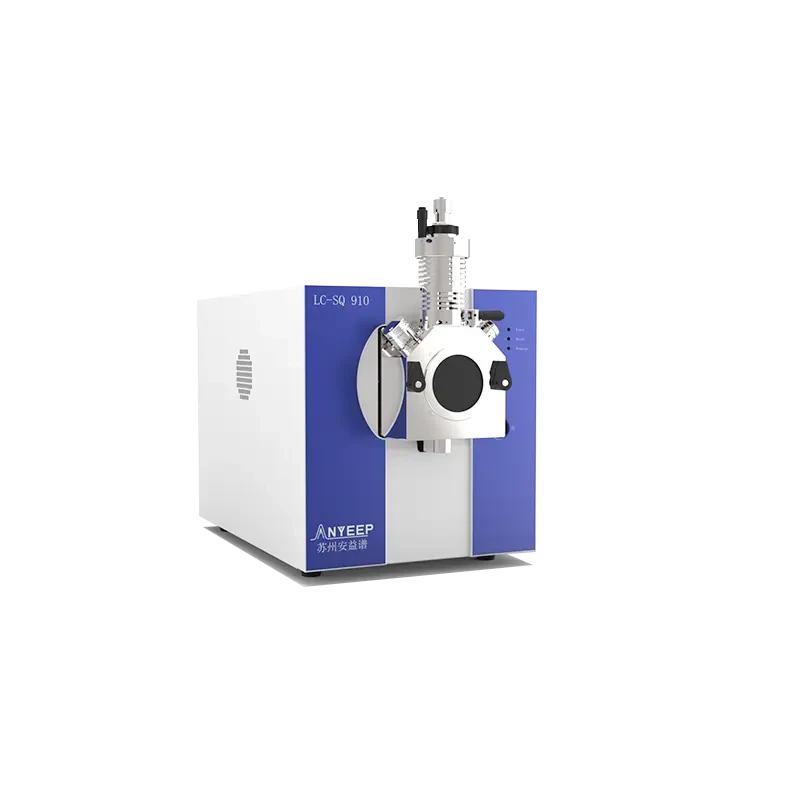
This study established a residue detection method for 8 quinolone drugs using the Aneypu SQ910 single quadrupole LC-MS. Utilizing QuEChERS sample preparation, the method enables simultaneous detection of norfloxacin, ciprofloxacin, enrofloxacin, and other quinolones in a single injection, making it suitable for food safety testing in livestock, poultry, and aquatic products.
Overview
Fluoroquinolones are synthetic broad-spectrum antimicrobials widely used in livestock, poultry, and aquaculture. Improper use or failure to observe withdrawal periods can lead to drug residues in animal-derived foods. Long-term consumption may cause antibiotic resistance and allergic reactions in humans. Therefore, China's food safety standards impose strict limits on fluoroquinolone residues in animal-origin foods.
High-performance liquid chromatography-mass spectrometry (LC-MS), known for its high selectivity and sensitivity, is the mainstream technology for multi-residue analysis of veterinary drugs. This study relies onEnzyte SQ910 Single Quadrupole LC-MS System, establish a system capable of simultaneous determinationNorfloxacin, Enoxacin, Ciprofloxacin, Ofloxacin, Lomefloxacin, Marbofloxacin, Sarafloxacin, OrbifloxacinAnalysis methods for 8 types of quinolone drug residues. The method employs QuEChERS rapid pretreatment combined with ESI positive ion SIM monitoring to separate and quantify 8 target analytes in a single injection. Method validation meets food safety testing standards, making it suitable for food testing laboratories, third-party testing agencies, and market regulation labs to screen and quantify quinolone residues in animal-derived foods.
Experimental Section
Instruments and Reagents
InstrumentAnypu SQ910 Single Quadrupole Liquid Chromatography-Mass Spectrometry (LC-MS) System
Reagents and Standards8 types of quinolone standard reference materials (purity ≥ 98%); HPLC-grade acetonitrile and methanol; formic acid (HPLC grade); anhydrous magnesium sulfate, sodium acetate, C18 adsorbent, PSA adsorbent; ultrapure water for experiments.
Standard Solution PreparationWeigh each quinolone standard separately, dissolve in methanol to prepare individual stock solutions at 100 mg/L. Mix these to create a combined intermediate solution at 1 mg/L and store protected from light at -20°C. Before use, dilute stepwise with blank matrix extraction solution to obtain a series of matrix-matched working standards.
Chromatographic Conditions
Column: C18 Column
Mobile Phase: A 0.1% formic acid in water; B acetonitrile
Flow rate: 0.3 mL/min
Column Temperature: 40 °C
Injection volume: 5 μL
Mass Spectrometry Conditions
Ion Source: Electrospray Ionization (ESI)Positive Ion Mode
Scan Mode: Selected Ion Monitoring (SIM)
Method Validation Results
Validate linearity range, limit of detection (LOD), limit of quantification (LOQ), recovery, and precision in accordance with the technical specifications for veterinary drug residue testing:
Linear relationship8 quinolones showed good linearity in matrix-matched standard solutions ranging from 0.05 to 100 μg/L, with all correlation coefficients (R²) greater than 0.999, meeting quantification requirements.
Limit of Detection (LOD) & Limit of Quantitation (LOQ)LOD calculated at S/N=3, LOQ at S/N=10. LOD for 8 target analytes ranges from 0.2 to 0.8 μg/kg, and LOQ ranges from 0.8 to 2.5 μg/kg—exceeding national standard limits for trace residue detection.
Accuracy (spiked recovery)Blank matrix spiked at low, medium, and high levels (3 each; 2.0, 10.0, 50.0 μg/kg): average recovery rates for 8 quinolones92.3%~108.5%falls within the acceptable range of 70% to 120%.
PrecisionIntra-day precision RSD ≤ 4.8%, inter-day precision RSD ≤ 6.2% (n=6). The method demonstrates excellent stability, making it ideal for continuous batch testing.
Solution Benefits
✅ Domestic single-quadrupole LC-MS, high cost-performance ratio: AnYiPu SQ910 LC-MS – domestically developed, with procurement and maintenance costs significantly lower than imported equivalents, reducing laboratory entry barriers.
✅ Detect 8 quinolones in a single injection:10 min chromatography cycle significantly boosts multi-residue detection throughput and shortens sample analysis time.
✅ Strong resistance to matrix interferenceESI-SIM mode offers high selectivity. Paired with optimized QuEChERS sample preparation, it effectively reduces matrix interference in complex samples such as meat and seafood.
✅ Easy to operate and maintainThe instrument features a compact design with an easily removable and cleanable ion source. Its intuitive software reduces the learning curve for operators, making it ideal for routine high-throughput testing in standard laboratories.
✅ Compliance AdaptationThe method's performance metrics comply with domestic regulations for veterinary drug residue testing in animal-derived foods and are suitable for food safety supervision sampling and risk monitoring.
Conclusion
This method is based on the Anye SP910 single quadrupole LC-MS to establish a detection protocol for simultaneously determining 8 quinolone veterinary drug residues. The sample preparation is simple, with high sensitivity and excellent reproducibility, fully meeting routine monitoring requirements for quinolone residues in animal-derived foods. The domestic SQ910 LC-MS provides food testing laboratories with a cost-effective and reliable multi-residue liquid chromatography-mass spectrometry solution, supporting the implementation of food safety regulatory efforts.