Method for Detection of 16 Fungal Toxins in Chinese Herbal Medicines Using Liquid Chromatography-Tandem Mass Spectrometry
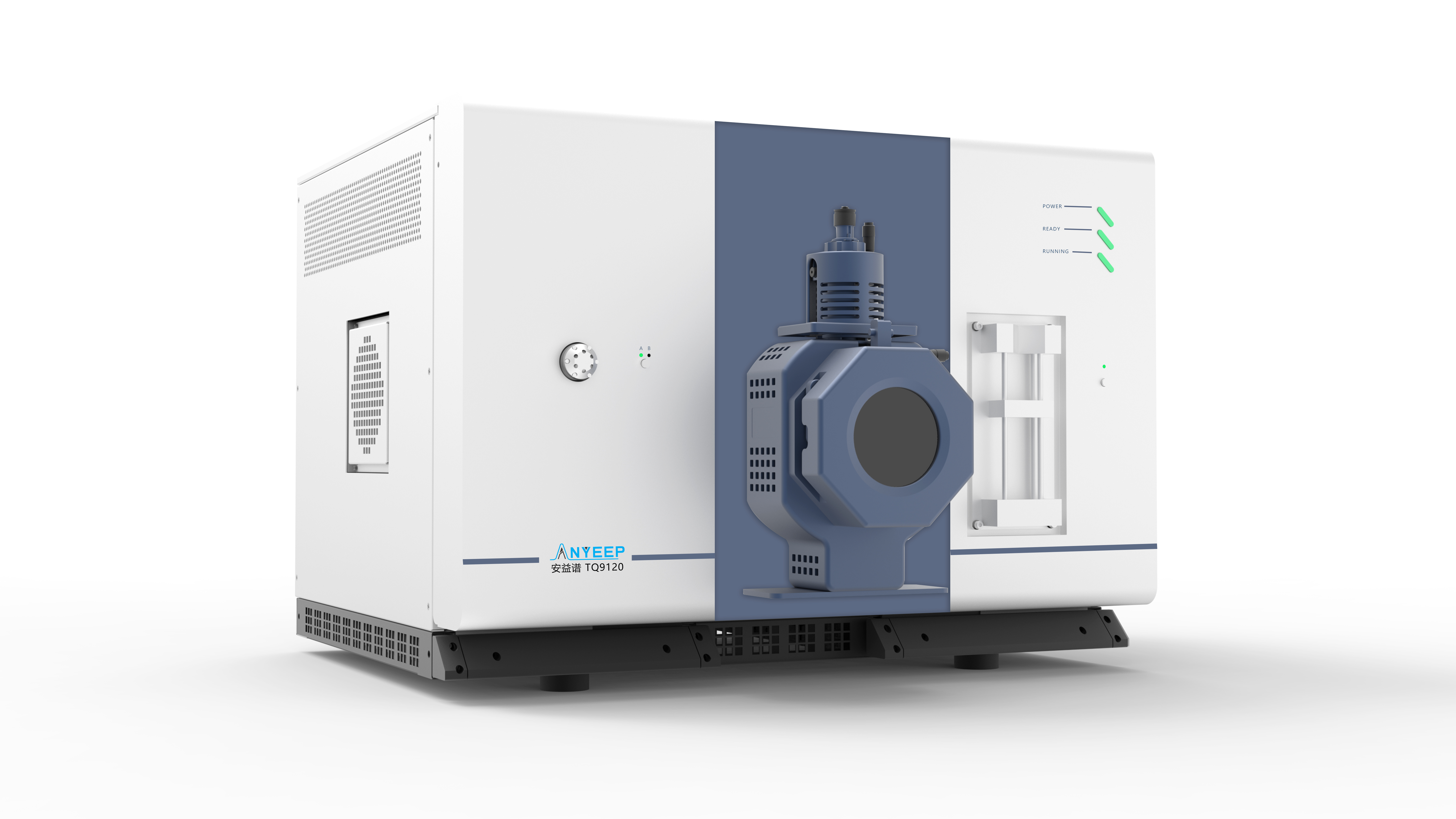
This study utilized the Anyeep TQ9120 ultra-high-performance liquid chromatography-tandem mass spectrometry system from Anyeep to establish a method for simultaneously detecting 16 mycotoxins in Chinese herbal medicines. The method demonstrated excellent linearity, with detection and quantification limits meeting relevant standard requirements. This approach enables accurate identification and quantification of mycotoxins using the specified method and equipment.
Introduction
Mycotoxins are toxic metabolites produced by fungi, commonly found in moldy grains, feed, or food, such as aflatoxin and ochratoxin. They can threaten human and animal health through the contaminated food chain, posing risks like carcinogenicity, teratogenicity, or immunosuppression. Mycotoxins cause severe harm to humans and animals; for instance, fumonisin is a Group 2B carcinogen, while aflatoxin is a 1 carcinogen.
This study references the 2025 edition of the Pharmacopoeia of the People's Republic of China, Section 1.18 (Fungal Toxin Determination), Subsection 6 (Determination of Multiple Fungal Toxins). It quantifies 16 fungal toxins using the external standard method.
Instruments and Reagents
Anyeep TQ9120 Ultra-High Performance Liquid Chromatography-Tandem Mass SpectrometrySystem
Acetonitrile, Methanol(Mass spectrometry grade, Thermo Fisher Scientific, USA)
Acetic acid, ammonium acetate (MS grade, ANPEL)
HLB Solid-Phase Extraction Cartridge (Shanghai Anpel, SBEQ-CA6679)
Liquid Chromatography Conditions
Mobile PhaseA: 1% acetic acid, 5 mM ammonium acetate, water
Mobile Phase B: Methanol
Chromatography column: WatersACQUITY UPLC BEH C18, 1.7μm,2.1×100 mm
Column Temperature:35 ℃
Flow rate: 0.3 mL/min
Injection volume:5 μL
Mass Spectrometry Conditions
Ionization Source: Electrospray Ionization Source (ESI±)
Source Temperature: 600 ℃
Spray Voltage: +5500 V/-4500 V
air curtain: 35 psi
Mist gas: 60 psi
Auxiliary Gas: 70 psi
Crash: 14
Scan Mode:MRM
Gradient elution program
Time min | A% | B% | Flow Rate mL/min |
0.0 | 90 | 10 | 0.3 |
2.0 | 90 | 10 | 0.3 |
3.0 | 80 | 20 | 0.3 |
7.0 | 76 | 24 | 0.3 |
10.5 | 70 | 30 | 0.3 |
13.5 | 40 | 60 | 0.3 |
15.0 | 30 | 70 | 0.3 |
18.0 | 25 | 75 | 0.3 |
18.1 | 5 | 95 | 0.3 |
21.9 | 5 | 95 | 0.3 |
22.0 | 90 | 10 | 0.3 |
25.0 | 90 | 10 | 0.3 |
MRM Parameters for Analyte
No. | Test Item | Q1Ion | Q3ion | CE (V) | Polarity | DP (V) | Retention Time |
(min) | |||||||
1 | Fusarium toxin | 371.0 | 281.0* | 10 | Negative | 150 | 2.5 |
| NIV | 371.0 | 59.0 | 35 | Negative | 150 | 2.5 |
2 | DeoxynivalenolDeoxynivalenol (DON) | 355.0 | 265.0 | 10 | Negative | 150 | 4.5 |
| DONE | 355.0 | 247.0* | 15 | Negative | 150 | 4.5 |
3 | Deoxynivalenol-3-glucoside | 517.0 | 427.0* | 25 | Negative | 100 | 4.8 |
| DON-3G | 517.0 | 247.0 | 20 | Negative | 100 | 4.8 |
4 | 3-Acetyldeoxynivalenol | 339.0 | 231.0* | 10 | Positive | 190 | 10.1 |
| 3-AcDON | 339.0 | 213.0 | 15 | Positive | 190 | 10.1 |
5 | 15-Acetyl-deoxynivalenol | 356.0 | 261.0* | 15 | Positive | 180 | 10.4 |
| 15-AcDON | 356.0 | 137.0 | 15 | Positive | 180 | 10.4 |
6 | Aflatoxin G2 | 331.05 | 245.05 | 30 | Positive | 110 | 13.2 |
| AFG2 | 331.05 | 285.05* | 34 | Positive | 110 | 13.2 |
7 | Aflatoxin G1 | 329.0 | 243.0 | 27 | Positive | 130 | 13.7 |
| AFG1 | 329.0 | 283.05* | 27 | Positive | 130 | 13.7 |
8 | Aflatoxin B2 | 315.0 | 287.05 | 27 | Positive | 190 | 14.1 |
| AFB2 | 315.0 | 259.05* | 36 | Positive | 190 | 14.1 |
9 | Aflatoxin B1 | 312.95 | 285.05* | 24 | Positive | 170 | 14.4 |
| AFB1 | 312.95 | 241.05 | 41 | Positive | 170 | 14.4 |
10 | HT-2 Toxin | 442.0 | 263.0* | 10 | Positive | 100 | 15.6 |
| HT-2 | 442.0 | 215.0 | 15 | Positive | 100 | 15.6 |
11 | Fumonisin B1 | 722.4 | 352.3* | 30 | Positive | 100 | 16.0 |
| FB1 | 722.4 | 334.3 | 55 | Positive | 100 | 16.0 |
12 | T-2 toxin | 484.0 | 305.0* | 10 | Positive | 100 | 16.2 |
| T2 | 484.0 | 185.0 | 20 | Positive | 100 | 16.2 |
13 | Ochratoxin A | 404.0 | 358.0* | 10 | Positive | 100 | 16.7 |
| Over-the-Air | 404.0 | 239.0 | 25 | Positive | 100 | 16.7 |
14 | Zearalenone | 317.0 | 175.0* | 25 | Negative | 150 | 16.9 |
| ZEN | 317.0 | 131.0 | 28 | Negative | 150 | 16.9 |
15 | bacitracin(Verrucarum) | 325.0 | 310.0* | 25 | Positive | 100 | 17.2 |
| ST | 325.0 | 281.0 | 41 | Positive | 100 | 17.2 |
16 | Fumonisin B2 | 706.5 | 336.3* | 35 | Positive | 100 | 17.5 |
| FB2 | 706.5 | 318.3 | 40 | Positive | 100 | 17.5 |
Note: * denotes quantitative ion pairs; detection window is ±0.6 min.
Sample Processing
Sample ProcessingAccurately weigh about 5 g of the test powder (passed through a No. 2 sieve), then accurately weigh 5.0 g. Precisely add 50 mL of 70% methanol solution, sonicate for 30 minutes, centrifuge, and accurately pipette 10 mL of the supernatant. Dilute with water to 20 mL and mix well. Accurately transfer 3 mL and pass it slowly through a pretreated HLB cartridge (previously washed sequentially with 3 mL of methanol and water each) until an appropriate amount of air passes through. Collect the eluate; subsequently elute with 3 mL of methanol and collect the eluate. Combine both eluates, evaporate slowly under nitrogen at 40°C until nearly dry, then reconstitute with 50% acetonitrile solution to a final volume of 1 mL. Filter through a micro-porous membrane (0.22.μm) Filter and collect the subsequent filtrate.
Matrix-matched reference solutionTake 5 g of blank matrix sample and process it following the same preparation method as the test solution until "slowly blown with nitrogen at 40 °C to near dryness". Then, precisely add 1.0 mL of reference standard solutions with concentrations ranging from 0.05 ng/mL to 10 ng/mL (calculated as aflatoxin G1). Vortex to mix thoroughly and filter through a micro-porous membrane (0.22).μm) Filter and collect the subsequent filtrate.
Linear Range
No. | Test Item | Retention Time min | Limit of Detection μg/kg | Limit of Quantitation μg/kg | Linear Range ng/mL | Linear Equation 1/x2 weighted | correlation coefficient r2 |
1 | NIV | 2.47 | < 2 | 66.7 | 10-2000 | Y = 1554.56 * X + 829.644 | 0.9986 |
2 | DONE | 4.47 | < 1 | 50.0 | 7.5-1500 | Y = 235.946 * X + 803.505 | 0.9982 |
3 | DON-3G | 4.75 | < 1 | 8.3 | 1.25-250 | Y = 4508.62 * X + 832.223 | 0.9988 |
4 | 3-AcDON | 10.11 | < 1 | 13.3 | 2-400 | Y = 3271.97 * X - 1730.95 | 0.9950 |
5 | 15-AcDON | 10.41 | < 0.5 | 6.7 | 1-200 | Y = 2929.49 * X - 192.716 | 0.9964 |
6 | AFG2 | 13.22 | < 0.05 | 0.10 | 0.015-3 | Y = 8195.4 * X + 71.7833 | 0.9957 |
7 | AFG1 | 13.74 | < 0.05 | 0.33 | 0.05-10 | Y = 14319.3 * X + 72.6576 | 0.9995 |
8 | AFB2 | 14.07 | < 0.05 | 0.12 | 0.015-3 | Y = 28185 * X - 37.6203 | 0.9960 |
9 | AFB1 | 14.40 | < 0.005 | 0.33 | 0.05-10 | Y = 46377.5 * X + 449.483 | 0.9972 |
10 | HT-2 | 15.59 | < 0.2 | 3.3 | 0.5-100 | Y = 27088.5 * X + 2.00531 | 0.9940 |
11 | FB1 | 15.98 | 1 | 6.7 | 1-200 | Y = 4530.33 * X + 295.594 | 0.9960 |
12 | T-2 | 16.22 | < 0.2 | 0.67 | 0.1-20 | Y = 47552.5 * X - 64.3055 | 0.9957 |
13 | Over-the-Air | 16.74 | < 0.2 | 0.67 | 0.1-20 | Y = 55741.1 * X + 1378.15 | 0.9962 |
14 | ZEN | 16.87 | < 0.5 | 6.7 | 1-200 | Y = 6623.71 * X + 1856.37 | 0.9992 |
15 | ST | 17.12 | < 0.005 | 0.33 | 0.05-10 | Y = 125551 * X + 86696.9 | 0.9961 |
16 | FB2 | 17.53 | < 0.5 | 3.3 | 0.5-100 | Y = 15676.8 * X - 56.605 | 0.9950 |
Summary
This study established an ultra-high-performance liquid chromatography-tandem mass spectrometry (UPLC-MS/MS) system using the Anyeep TQ9120 for detecting 16 fungal toxins in Chinese herbal medicines. The results demonstrate that this method offers excellent sensitivity, stability, and a wide linear range, meeting the requirements of the Chinese Pharmacopoeia. It is suitable for routine analysis and detection of fungal toxins.